
SIL 30
Soft, biocompatible, and tear resistant
Durometer (Shore A Hardness)
35
Elongation At Break
350%
Comparable Thermoplastics
SEBS TPE
Glass Transition Temperature
-5 C / 23 F
Tear Strength
10 kN/m / 57.1 lbf/in
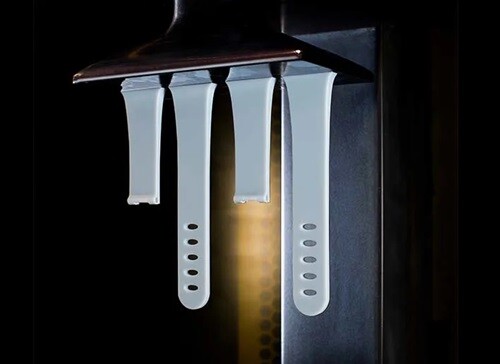
As the first Carbon Global Design Partner, we have been at the forefront leveraging these digital tools for design for additive manufacturing (DfAM) since 2017.
Harness our team’s expertise to take advantage of Carbon digital printing technology for your prototype and production needs.
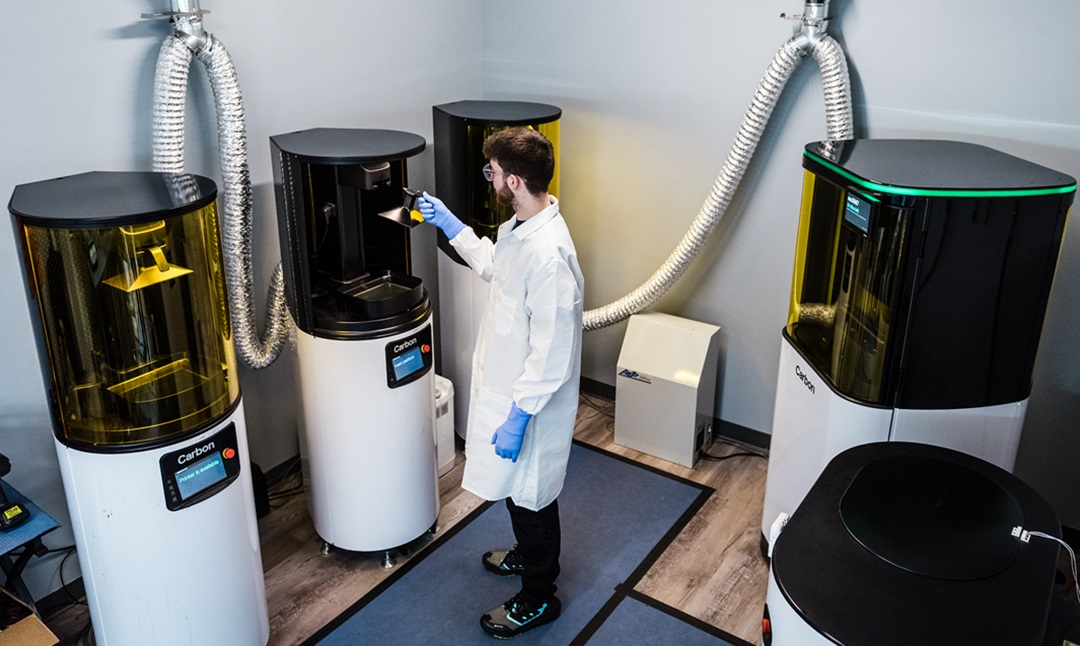
Our additive manufacturing shop utilizes two Carbon M2 printers, two new Carbon M3 printers, and two new Carbon M3 Max printers, a Smart Part Washer, and Carbon’s Design Engine.
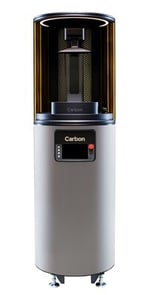
The Carbon M2 Printers are well suited for a wide range of applications. They offer speed, accuracy, and a medium-built platform size. They feature high-resolution printing, which is perfect for smaller parts with intricate features such as threading or internal channels.
Go from prototype to production on the same machine with no minimum volumes.
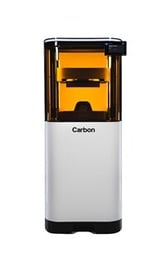
The M3 printer and M3 Max are the next generation of Carbon DLS printing. Throughput is up to 2.5x higher than our M2, thanks to active temperature control and real-time force feedback.
The M3 Max printer utilizes a true 4K light engine, doubling the build area with the same resolution. This enables us to print larger geometries and consolidate parts while using the same resolution.
| M2 Printer | M3 Printer | M3 Max Printer | |
| x | 189 mm (7.4") | 189 mm (7.4") | 307 mm (12.1") |
| y | 118 mm (4.6") | 118 mm (4.6") | 163 mm (6.4") |
| z | 326 mm (12.8") | 326 mm (12.8") | 305 mm (12") |
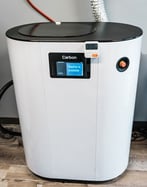
The Smart Part Washer automates the part cleaning process, giving a consistent, predictable, and thorough cleaning of your prints while reducing labor time per printed part.
The Carbon Design Engine Pro is a powerful cloud-based computation software that empowers our designers to create precisely tuned, high-performance products.
The software reduces the need for the tedious, manual editing of struts or structures post-generate. It automatically resolves lattice features, both large and small, while robustly transitioning between different zones inside the same part for tunable performance.
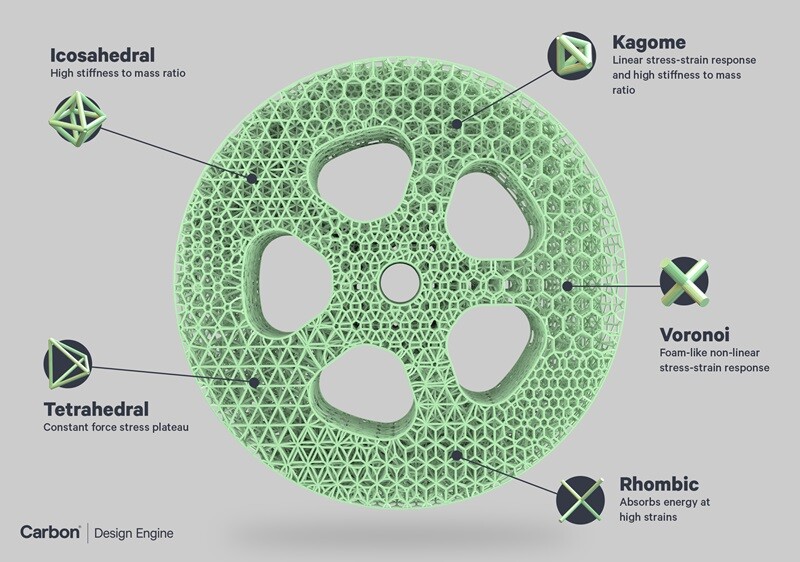
You can produce engineering-grade parts with predictable mechanical responses, enabling you to seamlessly transition from design to functional prototyping and end-use production, all on the same platform with Carbon DLS™.
Materials come in both rigid and elastomeric forms that are comparable to common thermoplastics.
View the list below or get the pdf table for a breakdown of which resin has the thermoplastic properties most important for your application needs. Download Carbon Thermoplastic Comparison Table
Across various industries and applications, the Carbon DLS™ process supports the development of an extensive array of functional, high-performance products. That includes consumer products like 3D-printed custom shoes, bike saddles, 3D-printed goggles, and 3D-printed headsets. Industrial products with everything from reimagined power supply design to jigs, clips, and fixtures for companies with high-performance requirements like the semiconductor industry. Advanced medical technology solutions manufactured using a comprehensive range of rigid and flexible materials capable of biocompatibility, or the automotive industry with electrical connectors, caps, and cabin components.
Soft, biocompatible, and tear resistant
Durometer (Shore A Hardness)
35
Elongation At Break
350%
Comparable Thermoplastics
SEBS TPE
Glass Transition Temperature
-5 C / 23 F
Tear Strength
10 kN/m / 57.1 lbf/in
Energy-returning, customizable colors, tunable material stiffness
Durometer (Shore A Hardness)
78A
Elongation At Break
330%
Comparable Thermoplastics
Thermoplastic Polyurethane Elastomers (TPU)
Glass Transition Temperature
-6 C / 21.2 F
Tear Strength
44 kN/m / 251.24 lbf/in
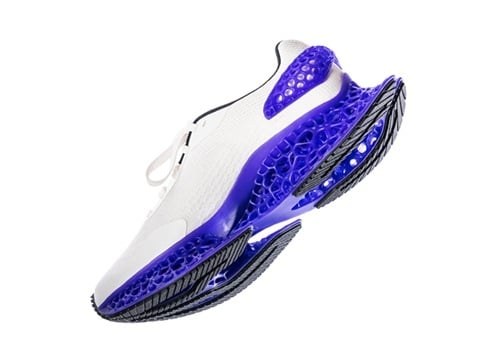
Highly elastic, tear resistant, and energy damping
Durometer (Shore A Hardness)
68
Elongation At Break
300%
Bayshore Resilience
17%
Comparable Thermoplastics
Thermoplastic Polyurethane Elastomers (TPU)
Glass Transition Temperature
10 C 50 F
Tear Strength
20 kN/m 114.2 lbf/in
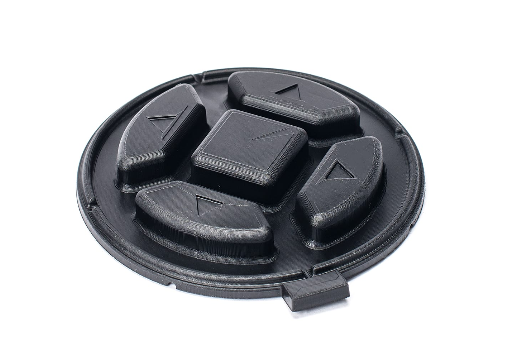
Highly elastic, tear resistant, and energy returning
Durometer (Shore A Hardness)
73
Elongation At Break
250%
Bayshore Resilience
30%
Comparable Thermoplastics
Thermoplastic Polyurethane Elastomers (TPU)
Glass Transition Temperature
-10 C / 14 F
Tear Strength
20 kN/m / 114.2 lbf/in
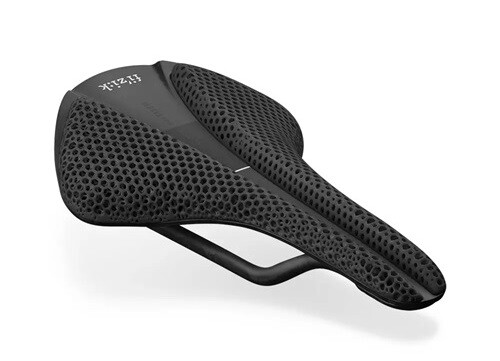
High-strength, excellent long-term durability, functional toughness
Ultimate Tensile Strength
84 MPa | 12 ksi
Elongation At Break
8%
Tensile Modulus
2800 MPa | 406 ksi
Comparable Thermoplastics
High-Performance (PEEK, PEI, PSU, PSSU), PBT, Polyamides / Nylons, Polycarbonate, Polypropylene
Heat Deflection Temperature
130 °C | 266 °F
Impact Strength (Notched)
45 J/m | 0.84 ft-lb/in
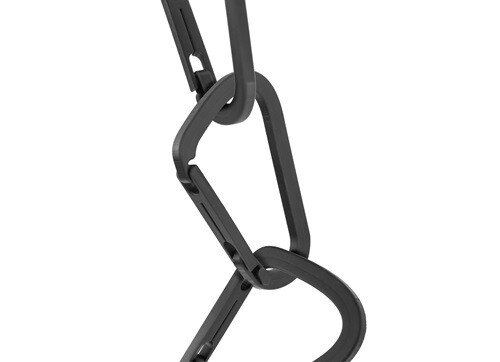
Flame retardance, functional toughness, and long-term stability
Ultimate Tensile Strength
94 MPa | 14 ksi
Elongation At Break
5%
Tensile Modulus
3300 MPa | 479 ksi
Comparable Thermoplastics
High-Performance (PEEK, PEI, PSU, PSSU), PBT, Polyamides / Nylons
Heat Deflection Temperature
135 °C | 275 °F
Impact Strength (Notched)
30 J/m | 0.56 ft-lb/in
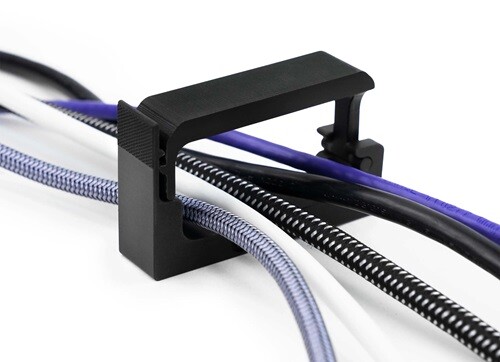
Exceptional temperature and chemical resistance, functional toughness, steam sterilizable
Ultimate Tensile Strength
76 MPa | 11 ksi
Elongation At Break
5%
Tensile Modulus
2700 MPa | 392 ksi
Comparable Thermoplastics
High-Performance (PEEK, PEI, PSU, PSSU), PBT, Polyamides / Nylons, Polycarbonate
Heat Deflection Temperature
155 °C | 311 °F
Impact Strength (Notched)
36 J/m | 0.67 ft-lb/in
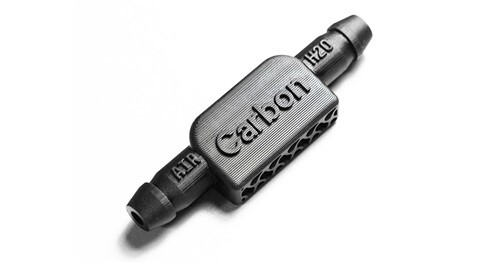
High-strength, functional toughness, and high ductility
Ultimate Tensile Strength
40 MPa | 6 ksi
Elongation At Break
100%
Tensile Modulus
1700 MPa | 247 ksi
Comparable Thermoplastics
High-Performance (PEEK, PEI, PSU, PSSU), PBT, Polyamides / Nylons, Polycarbonate
Heat Deflection Temperature
60 °C | 140 °F
Impact Strength (Notched)
15 J/m | 0.28 ft-lb/in
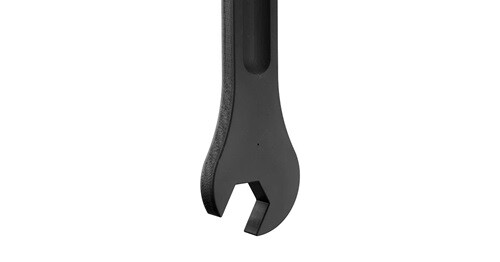
Rigid, tough, smooth surface quality
Ultimate Tensile Strength
51 MPa | 7 ksi
Elongation At Break
43%
Tensile Modulus
1800 MPa | 261 ksi
Comparable Thermoplastics
ABS, PMMA
Heat Deflection Temperature
63 °C | 145.4 °F
Impact Strength (Notched)
50 J/m | 0.94 ft-lb/in
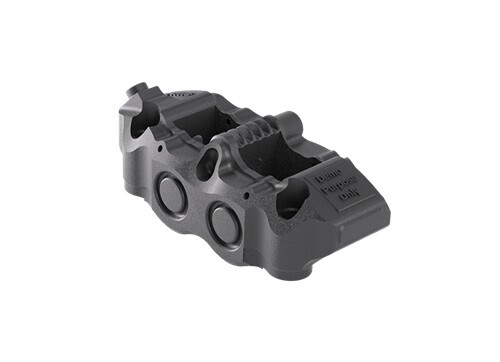
Temperature resistant, stiff, stable, great surface quality
Ultimate Tensile Strength
67 MPa | 10 ksi
Elongation At Break
2.4%
Tensile Modulus
3190 MPa | 463 ksi
Comparable Thermoplastics
High-Performance (PEEK, PEI, PSU, PSSU)
Heat Deflection Temperature
291 °C | 555.8 °F
Impact Strength (Notched)
14.6 J/m | 0.27 ft-lb/in
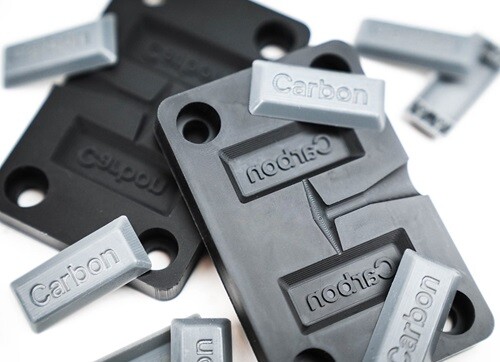
Tough, rigid, and clear
Ultimate Tensile Strength
42 MPa | 6 ksi
Elongation At Break
120%
Tensile Modulus
1500 MPa | 218 ksi
Comparable Thermoplastics
PMMA, Polycarbonate, Polypropylene, POM
Heat Deflection Temperature
50 °C | 127.4 °F
Impact Strength (Notched)
50 J/m | 0.94 ft-lb/in
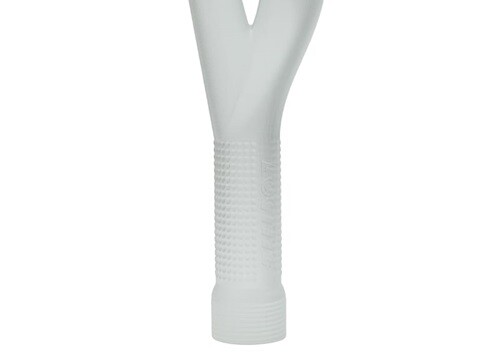
Simple, colorful, quick to print
Ultimate Tensile Strength
30 MPa | 4 ksi
Elongation At Break
30%
Tensile Modulus
1400 MPa | 203 ksi
Comparable Thermoplastics
ABS, POM
Heat Deflection Temperature
45 °C | 113 °F
Impact Strength (Notched)
30 J/m | 0.56 ft-lb/in
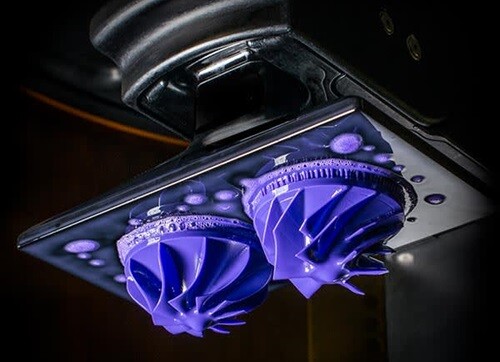
Tough and fatigue resistant
Ultimate Tensile Strength
25 MPa | 4 ksi
Elongation At Break
200%
Tensile Modulus
700 MPa | 102 ksi
Comparable Thermoplastics
Polypropylene
Heat Deflection Temperature
70 °C | 158 °F
Impact Strength (Notched)
40 J/m | 0.75 ft-lb/in
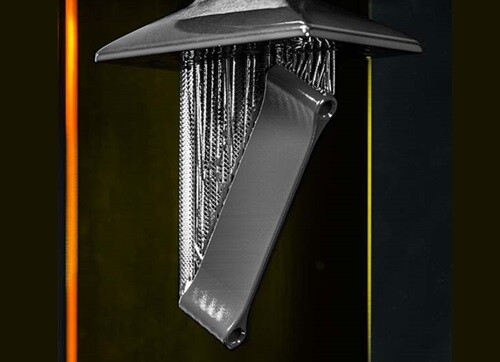
Strong, tough, and highly heat resistant
Ultimate Tensile Strength
35 MPa | 5 ksi
Elongation At Break
100%
Tensile Modulus
900 MPa | 131 ksi
Comparable Thermoplastics
ABS, High-Performance (PEEK, PEI, PSU, PSSU), Polyamides / Nylons, Polycarbonate, Polypropylene, POM
Heat Deflection Temperature
120 °C | 248 °F
Impact Strength (Notched)
75 J/m | 1.41 ft-lb/in
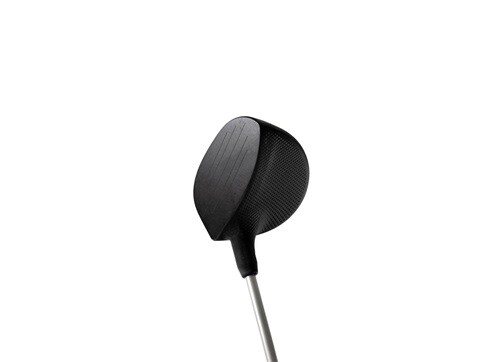
Rigid, high temperature with ESD properties
Comparable Thermoplastics
High-Performance (PEEK, PEI, PSU, PSSU)
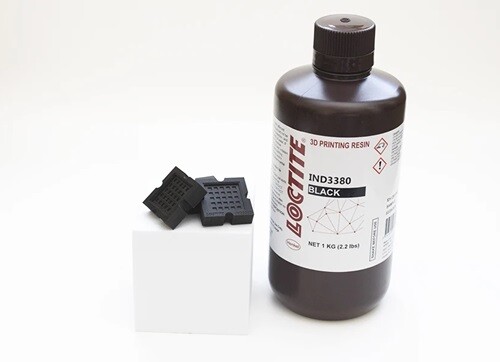
* We have limited availability of these resins and therefore require minimum order volumes and additional time for stocking.