Every stage of your product,
developed under one roof.
With our in-house designers, engineers, and machinists working together from day one, issues get fixed in CAD - not discovered in production, so you get your product shipped without compromising your vision, or timeline.
Carbon 3D Printing
De-Risk Product Development with Carbon 3D Printing
Prototype in Production Grade Materials.
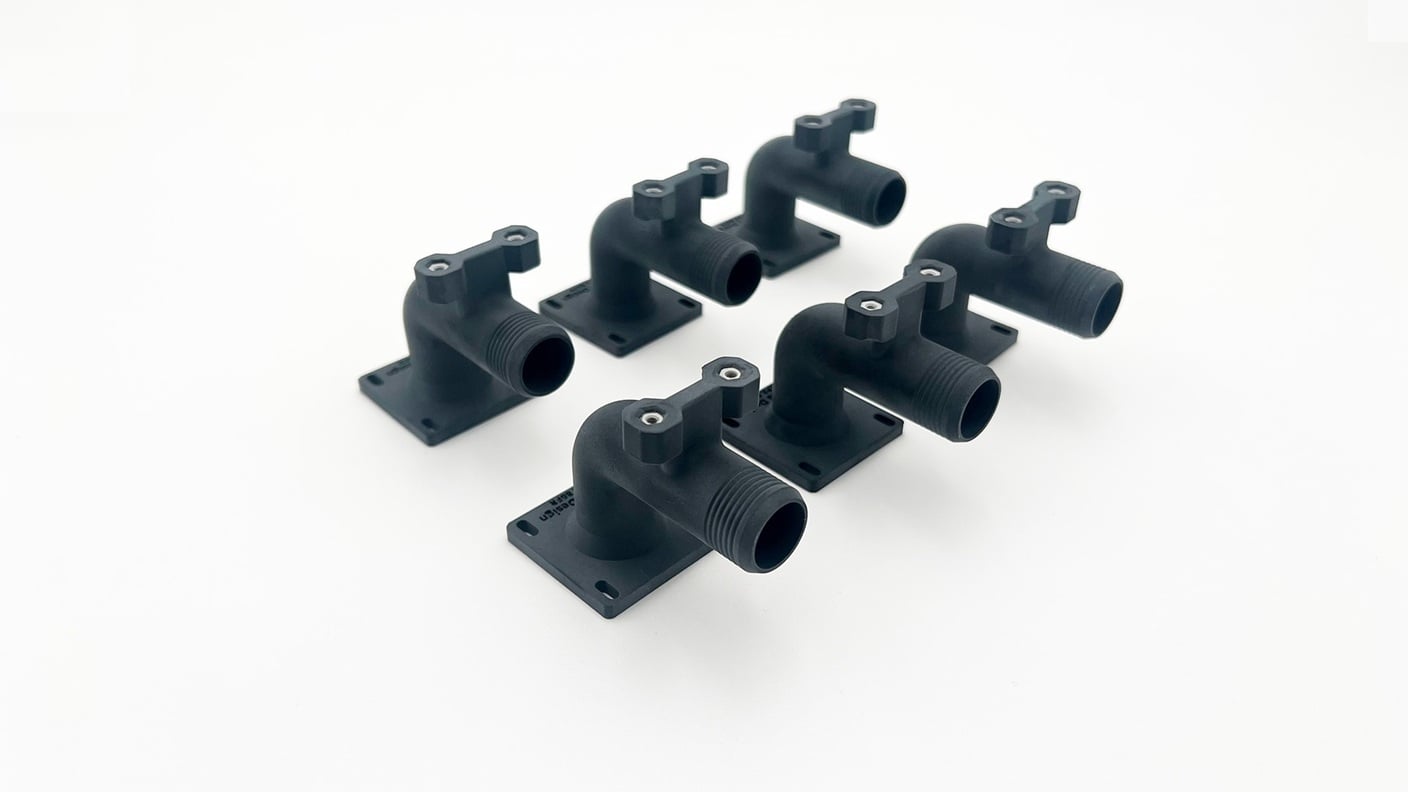
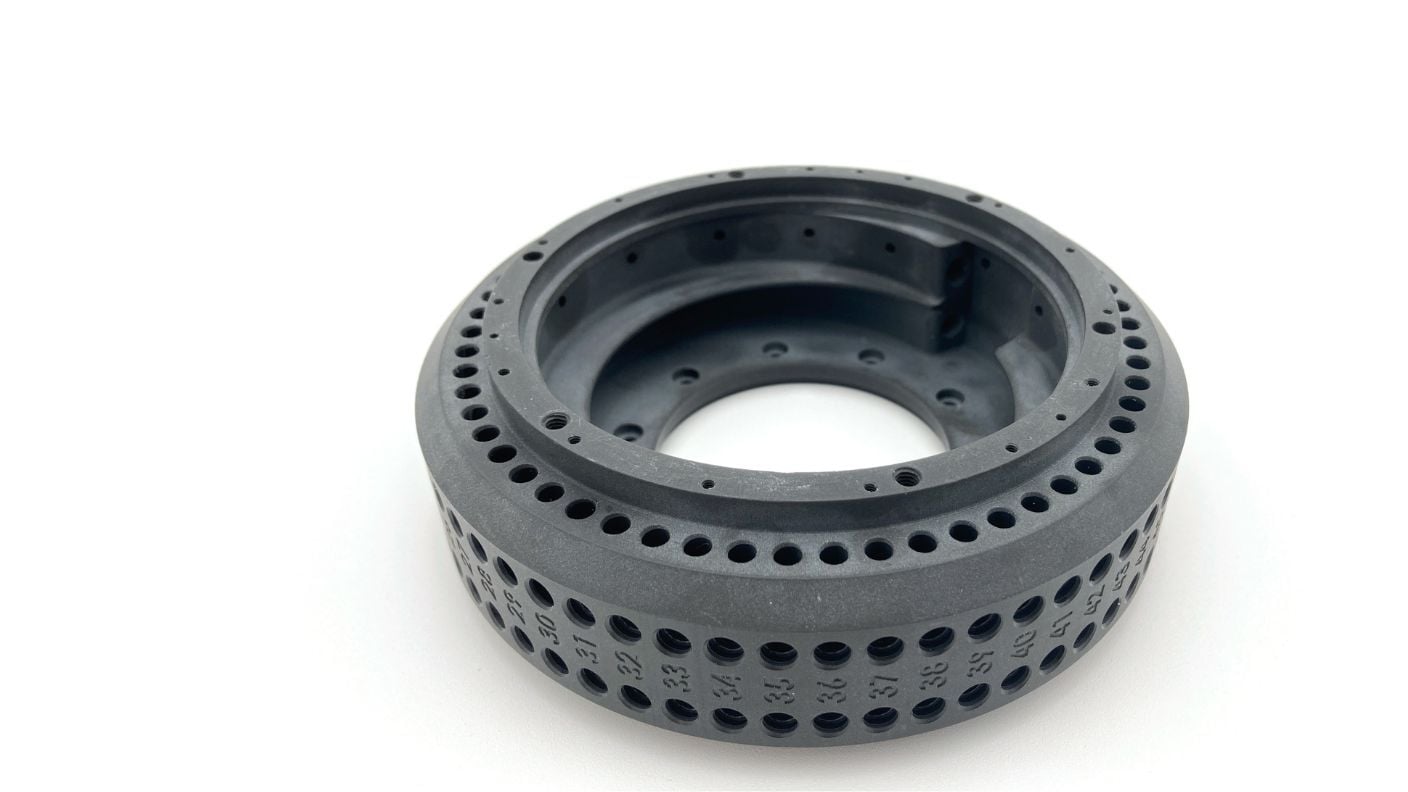
We are a design-focused Carbon additive manufacturing partner, helping de-risk part development and additive tooling by prototyping with the final materials.
We act as your guide to take you from design to scaled production.
"If your prototype doesn’t fail like the real part, it’s lying to you."

Benefits of Carbon Additive Manufacturing:

The Carbon DLS™ process lets you produce engineering-grade parts with predictable mechanical responses in both rigid and elastomeric resins. This means you can improve testing cycles by prototyping with the final materials, get to market faster by reducing product development cycles, and create variable density and performance out of a single material.
Carbon materials are validated and tested so their performance is predictable and consistent in terms of thermal, chemical, and structural parameters.
Applications Carbon DLS is ideal for:
Industrial Automation and Robotics
Jigs, fixtures, enclosures, damping components, end effectors and grippers to robot skins, footpads, and protective interfaces.
Specialty Automotive Components
Clips, housings, functional brackets, connectors, custom parts.
Medical and Diagnostic Device Components
Device housings, diagnostic components, therapeutic products.
Semiconductor & Electronics
Soldering fixtures, manifolds, fire retardant cable management, PCB test fixtures, custom fittings and ducts.
Consumer Products
Wearables, sporting goods, saddles, helmet liners, gloves, insoles, footwear, backpacks, workwear, padding grips, car seats.
Defense
Ventilated protective padding, ruggedized enclosures, optical mounts, flexible light shields, button and keypads.
How it works
The Carbon DLS™ printing process is enabled by a thin, oxygen-permeable window and dual-cure materials.
The use of dual-cure materials with a second heat-activated chemistry ensures that printed parts overcome the weaknesses and brittleness commonly associated with traditional resin-based 3D printing.
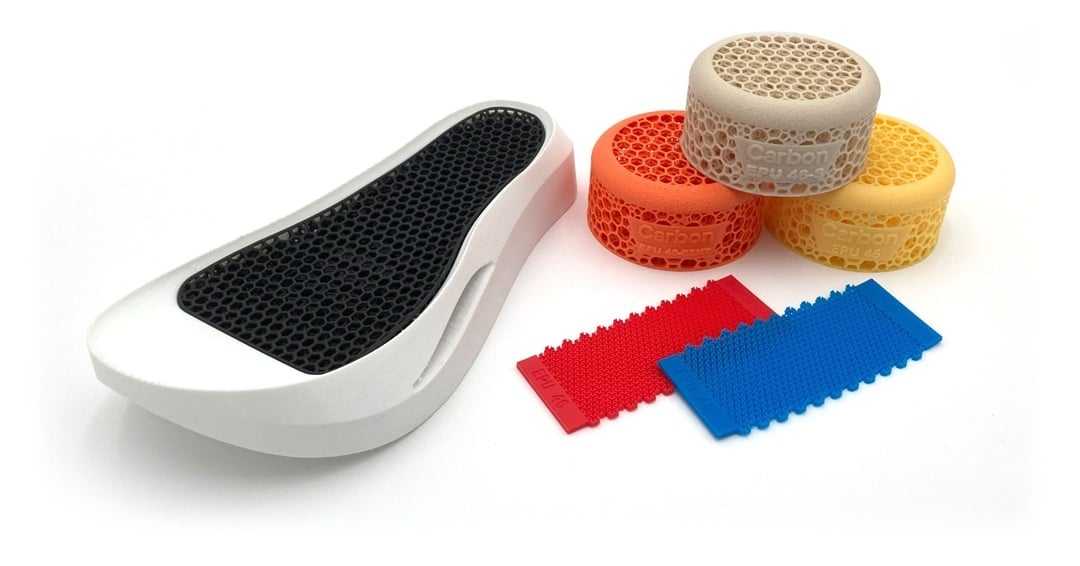
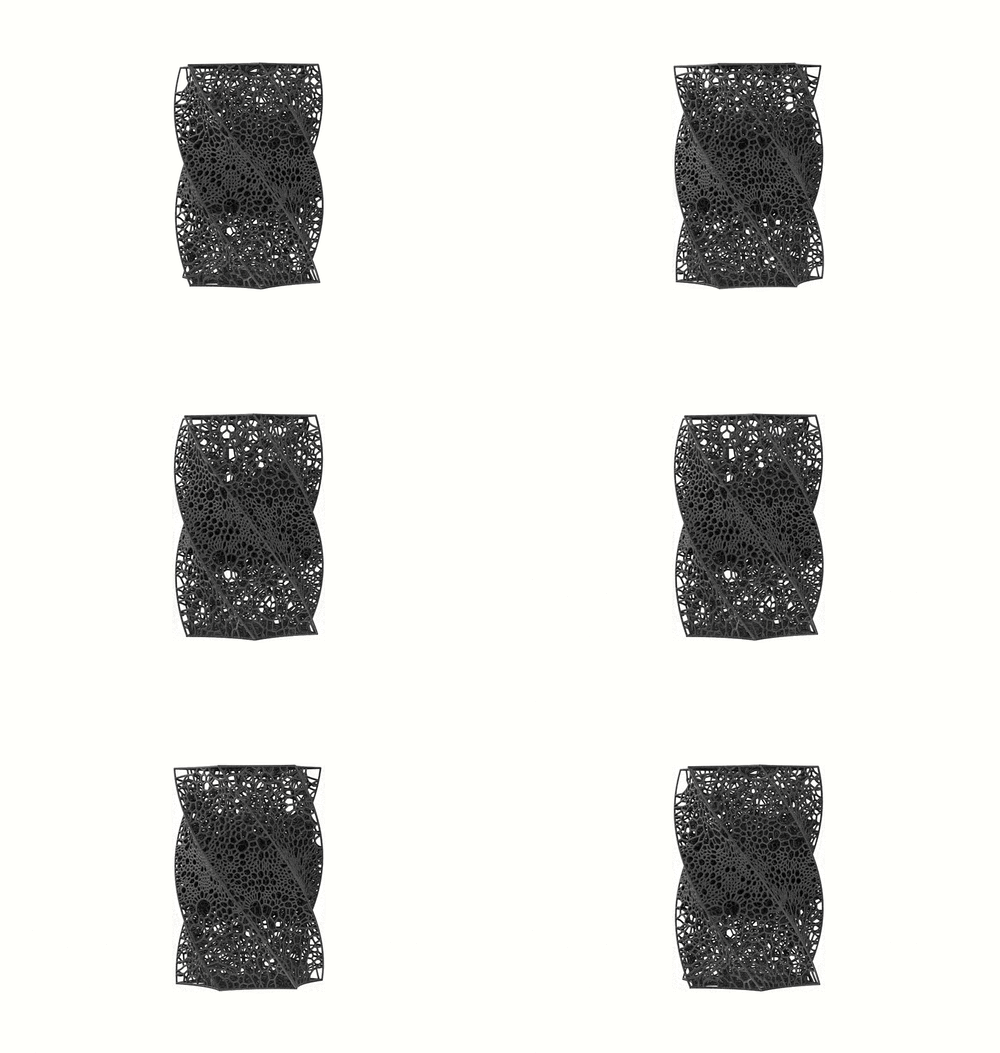
Variable Density Lattices
The Elastomer resins offer rubber-like flexibility, tear resistance, and tunable stiffness, making them well suited for comfort padding, footwear, and impact protection. The programmable lattice structures can reduce heat buildup and durability issues common in traditional foams and incorporate multiple zones to meet specific performance requirements.

We are a technical partner,
not a job shop
We are the only certified Carbon design and production partner in the United States that will take you from napkin sketch to scaled production.
Our team can handle design iteration, print parameters, post-processing, inspection, and first article documentation. We optimize your design for Carbon printers by minimizing support material, reducing hand finishing time, developing custom surface textures and lattice structures.
We design for Carbon—not just with Carbon.
Explore Our Case Studies
Fire retardant additive manufactured parts for Semiconductor
Post Machining Carbon 3D printed parts for underwater AUV

Additive Manufacturing Lab and Carbon Resins
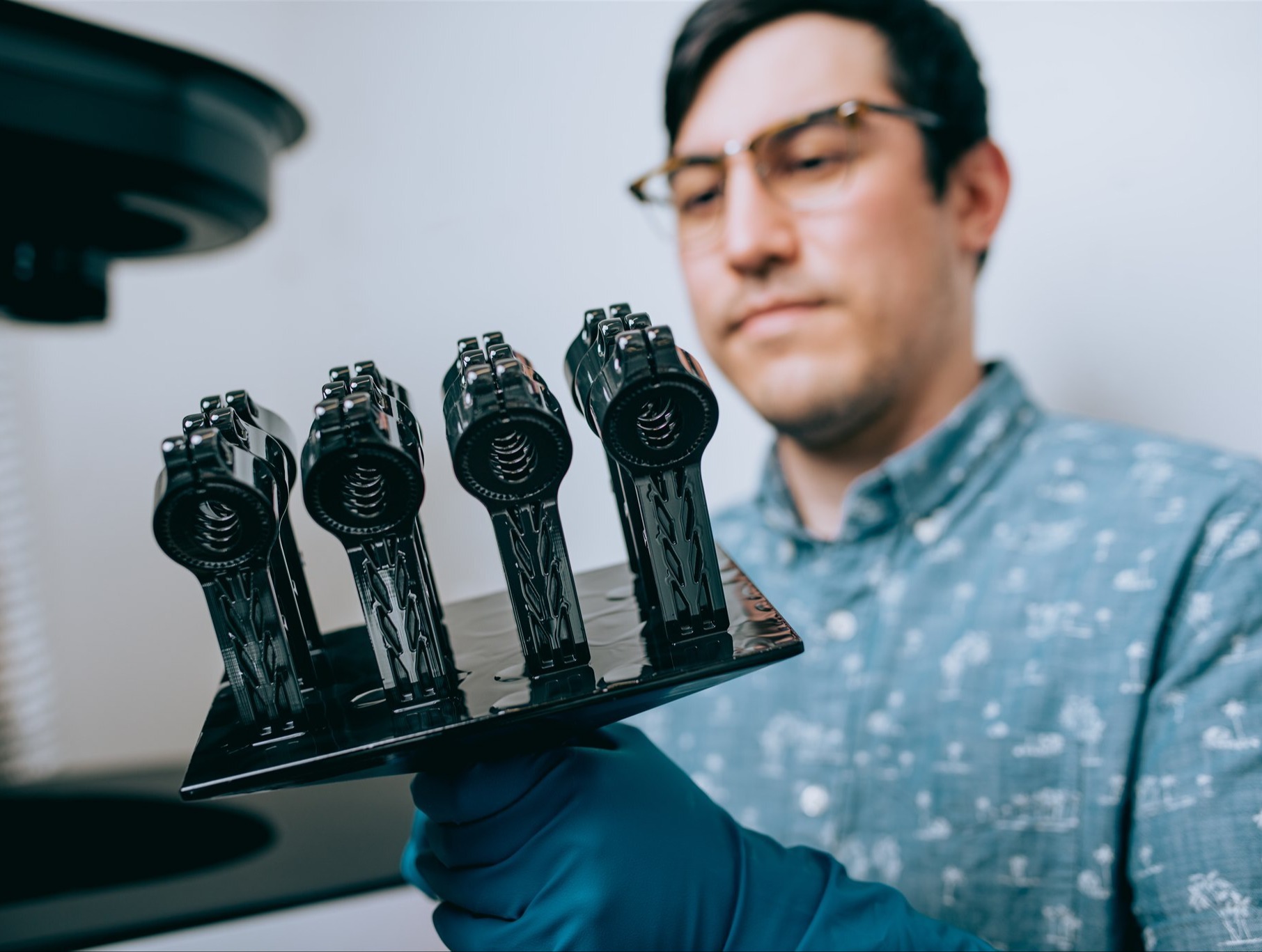
Our additive manufacturing lab has two Carbon M3 printers, two M3 Max printers, one M2 printer, a Smart Part Washer and a Spinner.
We leverage Carbon’s Design Engine, Grasshopper and the additive tools in NX for custom part development. Carbon materials come in both rigid and elastomeric forms that are comparable to common thermoplastics.
Learn about the lab and the resins with equivalent mechanical properties

Ready to put Carbon to work for your product?
Let us help you bring your ideas to life.
Still unsure Carbon DLS is a fit?
Carbon Design Guide
Download our free product design guide to Carbon DLS 3D Printing. This guide offers a multi-step workflow to help you design and support parts quickly.
Follow the steps below to determine if the part in question is a fit for DLS technology and can achieve first print success.
Optimize: Modify your part as needed to improve print quality and accuracy
Evaluate: Determine whether DLS technology and materials are a fit for your part.
Design: Design your part using the guidelines provided.
FAQs
-
Ideal quantities are geometry dependent and require review by our team. This range can be anywhere between 10-10,000 parts per year. Our shop is focused on high-quality orders that are optimized for the Carbon DLS™ printing process.
-
Turnaround times are variable per project. We take into account: design time, part geometry, hand processing time, and current capacity. We strive to get projects turned in short order and will give you an estimate at the beginning of your project.
-
The best way to increase production success is early involvement prior to design locks. Early involvement will give us time to thoroughly evaluate parts for Design for Additive Manufacturing (DfAM), make any changes and trial small preliminary runs.
-
No. We review every part for printability before providing a quote. Reviewing parts individually allows us to deliver quality parts and reduces the risk of printing incompatible geometries. It is common for us to reach out with questions to better understand the requirements of the parts.